Gas Line Replacement in New Braunfels
When patching stops working, gas line replacement in New Braunfels gives the home a completely new fuel gas system: new pipe from the meter to every appliance, sized for today's loads and installed to current Texas fuel gas code. It is the answer for piping with widespread corrosion, repeated leaks in different places, or capacity that no longer matches the household.
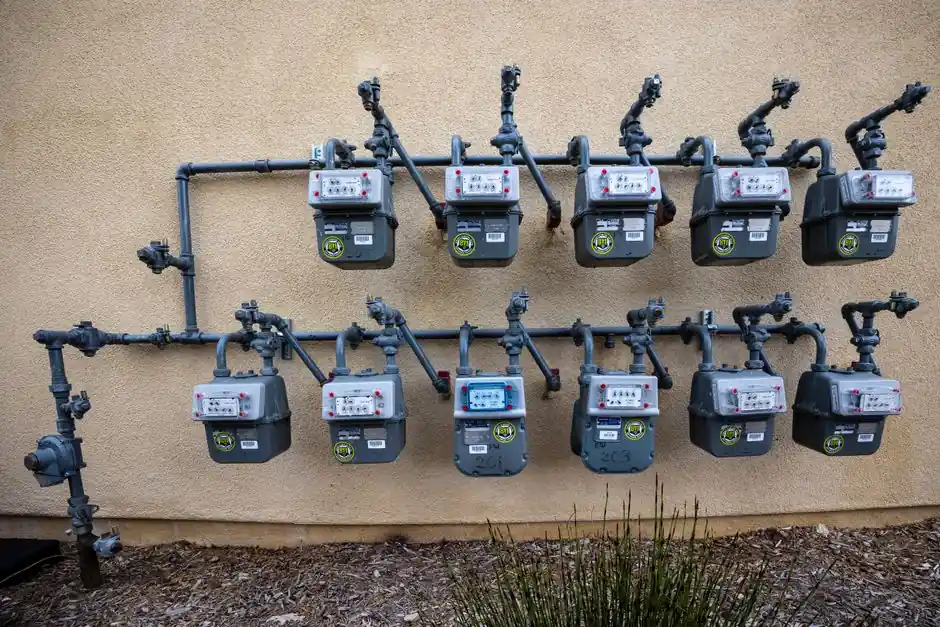
Service overview
Understanding Gas Line Replacement in New Braunfels
Gas line replacement in New Braunfels means taking out the old, failing, or undersized gas piping and installing a completely new run from the meter to each appliance. A spot repair fixes one leak or one bad joint; replacement renews the entire system in a single project. It is the right call when corrosion is widespread rather than isolated, when leaks keep appearing in new places after previous repairs, when the line cannot carry the BTU load of the household's appliances, or when the existing installation predates current fuel gas code and cannot be brought into compliance piecemeal.
Much of New Braunfels grew fast, and the gas piping in many homes is now decades old. Black steel pipe corrodes from the outside where it sits in damp soil, and the expansive clay soils found across Comal County swell and shrink with the seasons, stressing buried runs and the joints where piping enters the house. Older installations were also sized for fewer appliances than a modern household runs. If leak repairs keep recurring, if an inspection flagged systemic problems, or if a tankless water heater, pool heater, or outdoor kitchen is planned that the old line cannot feed, replacement addresses the root condition instead of patching symptoms one visit at a time.
! Common warning signs
Recurring leaks at different joints
When each repair fixes one spot and the next leak appears somewhere else, the piping itself is failing. Corrosion and joint deterioration do not stay where the last repair happened; they continue across the rest of the run. A pattern of failures at different locations is the clearest signal that the system, not a single joint, needs renewal.
Visible rust and flaking on exposed pipe
Heavy scaling, flaking, or pitting on visible gas piping means wall thickness is already compromised, and the sections you cannot see, inside walls, through masonry, and underground, are usually in worse shape. Surface corrosion is a preview of what the hidden pipe looks like.
Appliances starving for gas
Burners that run weak, a furnace that short-cycles, or a water heater that cannot keep up when other appliances run all point to undersized piping. No adjustment or cleaning fixes a line that is simply too small; only replacement with correctly sized pipe restores full performance to every appliance.
Scope of work
What's included in Gas Line Replacement
Our gas line replacement service in New Braunfels covers the complete renewal of the home's fuel gas piping, from the first assessment to the final pressure test, planned and executed to current code:
-
01
System assessment and sizing
Every appliance is mapped with its BTU demand, and the total developed length of the run is measured. The new piping is then sized so the system delivers full pressure with everything running at once, not just on paper, but at the farthest appliance under real load.
-
02
Permit-ready planning
Replacement work is planned to Texas fuel gas code requirements: correct materials for each location, proper support spacing, shutoff valve placement, sediment traps where required, and bonding. The installation is designed to pass inspection without rework.
-
03
Complete pipe renewal
Old piping is removed in sequence and new pipe is installed along the best available route, with sleeving where it passes through masonry, protection underground, and supports at proper intervals. Problem sections of the old route are simply not repeated.
-
04
Appliance reconnection and testing
Every appliance is reconnected with its own shutoff and drip leg, the full system is pressure tested, each joint is leak-checked, and every burner is verified for correct flame. The job is done when the whole system proves itself, not when the last fitting is tightened.
Benefits of Full Gas Line Replacement
Replacement ends the cycle of repeat repairs, brings the entire system up to current code in one project, and leaves piping sized for today's appliance loads with room for what comes next. One planned project replaces years of piecemeal fixes and the worry that travels with them.
Contact us nowTools and methods we use
Pipe sizing charts
Longest-length method tables that convert total BTU load and developed run length into the correct pipe diameter, so the farthest appliance gets full pressure.
Pressure test gauges
Calibrated gauges that verify the new installation holds test pressure with zero drop before the gas utility restores service.
Combustible gas detector
Electronic detection that confirms every new joint, valve, and connection is leak-free after the replacement is placed in service.
Pipe threading equipment
Power threading that cuts clean, precise threads on steel pipe for strong, code-compliant joints throughout the new run.
Local execution
Gas line replacement in New Braunfels has to account for how homes here were actually built. In the older streets near downtown and around Gruene, gas lines often run through attics, crawl spaces, or shallow trenches in expansive clay soil that swells when wet and shrinks when dry, stressing buried pipe and the joints where it enters the house. In the newer subdivisions, including Creekside, Vintage Oaks, Copper Ridge, and Oak Run, original piping is younger but was sometimes installed for smaller appliance loads than the household runs today. Replacement is the chance to fix both problems at once: reroute around trouble spots, add sleeving where pipe passes through limestone and masonry, and choose materials suited to Comal County soil conditions.
We also plan around how New Braunfels households use gas now versus when the home was built. A house plumbed in the 1990s for a furnace and a tank water heater may today need to feed a tankless unit, a gas range, a dryer, and an outdoor kitchen by the Comal. Replacement is sized for the real load, with a drip leg at each appliance, accessible shutoff valves, and bonding to current requirements. The finished system matches the home as it exists now, not as it was framed decades ago.
Neighborhoods we serve around New Braunfels
- • Creekside
- • Vintage Oaks
- • Copper Ridge
- • Downtown New Braunfels
- • Gruene area
Before & after
When Replacement Beats Repair in New Braunfels
The question behind every replacement estimate is where one more repair stops making sense, and the honest answer comes from the piping's overall condition, not the latest symptom. A single pinhole on a younger line with clean walls is a repair. But when a New Braunfels home's gas piping shows its age in several places at once, when the third service call in two years opens a different wall than the last two, or when an inspector or Atmos Energy flags the system as a whole, replacement stops being the expensive option and becomes the economical one. Three separate urgent visits, three drywall openings, and three disrupted days add up, and none of them touches the corrosion still spreading through the sections nobody has opened yet.
The age of the local housing stock makes this a common decision. Homes built from the 1980s through the early 2000s, which describe large parts of the older subdivisions, the neighborhoods around downtown New Braunfels, and the first phases of master-planned communities like Vintage Oaks, are reaching the age where original black steel gas piping shows systemic wear. Expansive clay soils work on buried sections year after year, and attic runs bake through summer after summer. When we assess a system for replacement, we look at the whole picture: visible corrosion at exposed sections, the repair history, sizing adequacy for current appliances, and the material's remaining service life. If two or more of those point the wrong way, replacement is the recommendation, explained with specifics from your home.
There is real value in choosing replacement deliberately instead of being forced into it by a failure. A planned project lets you pick the timing, coordinate with a water heater upgrade or a remodel already on the calendar, and route the new line along the best possible path. Emergency replacements, done under pressure after a major leak or a utility shutoff, rarely get that luxury. If the piping is showing the early pattern of systemic decline, the second leak in a year, the inspector's note, the weak burners, addressing it on your schedule is almost always better than letting the system choose the timing.
Replacement is also the moment to future-proof. Households add gas appliances over the years: the outdoor kitchen that was a someday project, the pool heater, the workshop heater, the second water heater for the addition. Sizing the new line with spare capacity costs little during installation and avoids a second major project later. We routinely size New Braunfels replacements with an extra capped branch in mind, so the next addition is a simple connection rather than another full repipe.
- ▸Recurring leaks at different locations signal systemic pipe failure rather than isolated defects.
- ▸Widespread visible corrosion means wall thickness is compromised beyond what spot repairs can address.
- ▸Undersized piping starves modern appliance loads and cannot be corrected without replacing the run.
- ▸A planned replacement disrupts the household less than repeated urgent repairs spread over several years.
Planning a Replacement in New Braunfels
One project, a fully renewed system
Replacement is a bigger decision than a repair, so the planning phase gets real attention. We walk the existing route, identify the best path for the new line, and explain exactly what comes out, what goes in, and how each appliance is affected while the work is underway. You know the full scope before anything is disconnected.
Most single-family replacements in the New Braunfels area are completed in a focused work window once materials are staged. Gas service is restored the same day the new line passes testing, every appliance is relit and checked, and the schedule is coordinated so household disruption stays as short as possible.
What to Expect During Gas Line Replacement
Load calculation and routing
Every gas appliance is inventoried and total BTU demand is calculated against the developed length of the planned route. Pipe sizing follows from real numbers, so the farthest appliance holds full pressure with everything running.
Old line isolation
Gas is shut off at the meter and the old piping is depressurized before removal begins. Sections come out in sequence so the work area stays organized, and the home is never left with an open, unmarked gas line.
New pipe installation
New piping goes in along the planned route with supports at proper intervals, sleeving at every penetration, accessible shutoffs, and drip legs at each appliance connection. Each joint is made up to code as the run progresses.
Testing and restoration
The complete system is pressure tested with zero allowable drop, every joint is leak-checked, appliances are reconnected and relit, and each burner is verified for proper flame before the project is considered complete.
Understanding Gas Line Replacement Cost Factors
The scope of a gas line replacement in New Braunfels varies widely from home to home. Rather than a flat figure, it helps to understand what drives the size of the project, so the conversation about your specific situation starts from the right place.
Total length and routing
Longer runs and difficult routing through finished walls, attics, or concrete add labor at every stage. Straightforward, accessible runs keep the project simpler from removal through testing.
Number of appliances
Each appliance connection means a branch line, its own shutoff, and a drip leg. Homes running many gas appliances have more connection points to build and more terminations to test.
Material and trenching needs
Underground sections may require trenching through the clay and limestone soils common around New Braunfels, and rocky ground changes the excavation portion of the work. Material choice, steel, polyethylene underground, or CSST where appropriate, follows code and site conditions.
Why Plan Replacement With Us
Replacement is a significant project and deserves to be planned like one. We size the system from measured loads, follow Texas fuel gas code throughout, pressure test everything before restoration, and leave you with documentation of what was installed and where it runs.
Call (830) 953-4059Frequently asked questions
How do I know if I need replacement instead of repair?
Replacement is the right move when leaks recur in different spots, when visible corrosion is widespread, when the line is undersized for the household's appliances, or when an inspection finds systemic problems. A single isolated leak on otherwise sound pipe is a repair; a pattern of failures across the system points to replacement. We assess the whole system and show you which case yours falls into.
Will I be without gas during the replacement?
Yes. Gas service stays off while the old line is removed and the new one is installed and tested. We schedule the work to keep the outage window as short as possible and restore service the same day testing is complete, relighting every appliance before we leave.
What pipe materials are used for replacement in New Braunfels?
Most residential replacements use black steel pipe for interior and exposed runs, with polyethylene pipe for underground sections where allowed, and CSST in specific applications. Material choice follows Texas fuel gas code and the conditions of your home, including soil exposure and routing.
Does replacement require a permit in New Braunfels?
Fuel gas piping work typically requires permitting and inspection through the local authority. We plan every replacement to code requirements, materials, supports, shutoffs, sediment traps, bonding, so the installation passes inspection without rework.
Can the new line be routed differently than the old one?
Often yes, and that is one of the genuine advantages of replacement. We can reroute around problem sections, avoid difficult chases, add proper sleeving at penetrations, and choose a path that is easier to service in the future. The old route's compromises do not have to be repeated.
How long does a gas line replacement take?
Most single-family residential replacements are completed within a focused work window once materials are staged and the plan is set. The exact timeline depends on total pipe length, the number of appliances, and whether trenching through rock or clay is involved.
Should I replace the line if I am adding new gas appliances?
If the existing line cannot carry the added BTU load, replacement with correctly sized piping is the right move. We calculate the household's total demand first, including the new appliances, so you know with numbers whether the current line is adequate or undersized.
Related services
Gas Line Repair
Targeted repairs for isolated leaks, faulty valves, and damaged sections, when the rest of the system is sound and worth keeping.
Gas Line Pressure Testing
Standalone verification testing that confirms a new or existing line holds pressure with zero leaks before it goes into service.
Get reliable Gas Line Replacement in New Braunfels today
Stop patching the same failing line. Contact us to plan a full, code-compliant replacement sized for your home as it exists today, with room for what comes next.